
Paraquat Lawsuit Update: Trials Start, Settlements Pending
If you spent years mixing, spraying, or working around paraquat and you have since been diagnosed with Parkinson’s disease, this month matters. The paraquat litigation has moved out of the paperwork phase and into courtrooms, and a paraquat lawsuit filed today enters a very different landscape than one filed two years ago.
Because the news coverage is scattered across federal and state dockets, it is hard to tell what actually changed. This post pulls the pieces together in plain English: where the cases stand, what a recent Supreme Court decision did and did not do, who may qualify, and what to do now if you think you were exposed.
We are not going to promise you an outcome. Instead, we will tell you what the record shows and where the open questions are.
What is paraquat, and why are people suing?
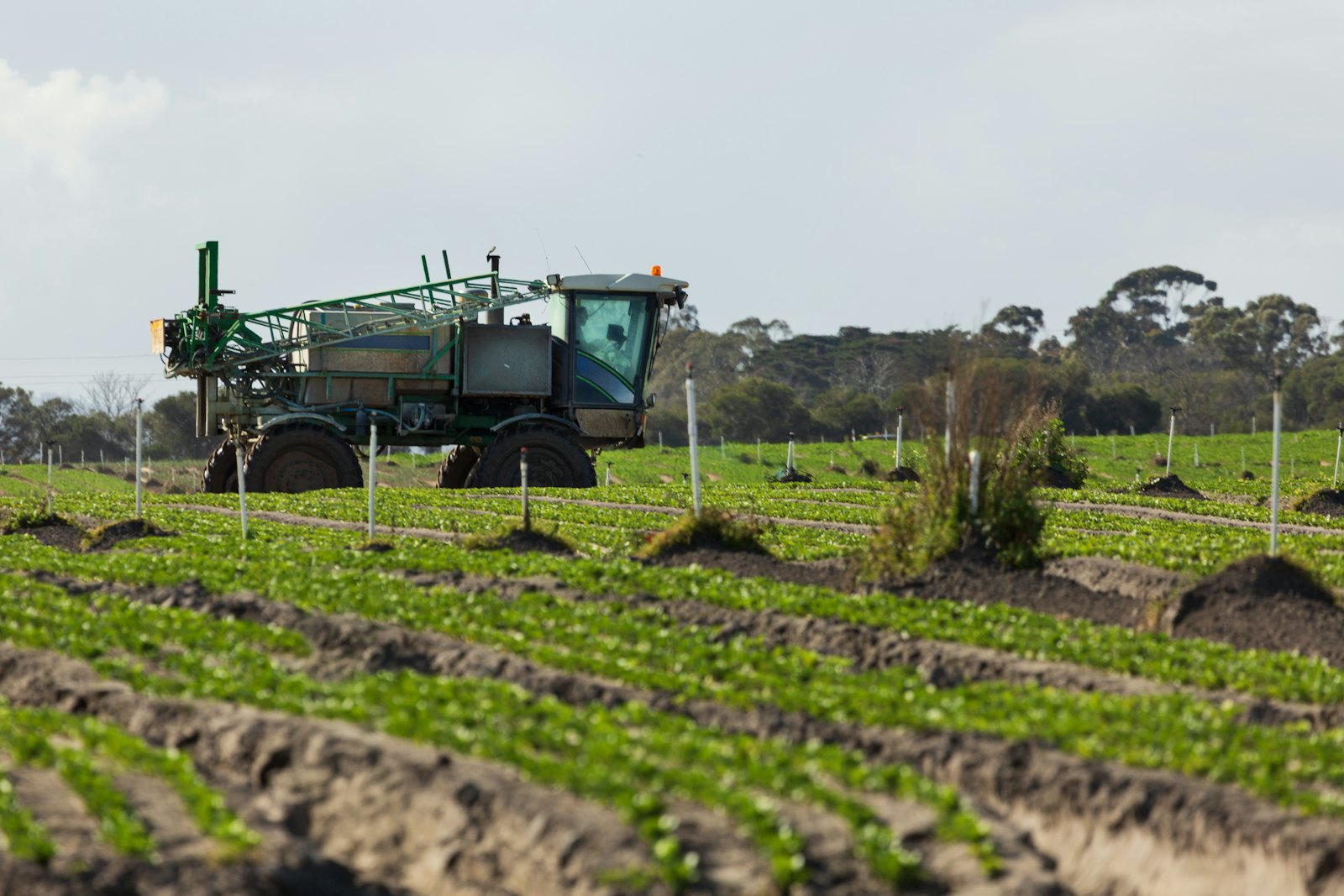
Paraquat is a fast-acting herbicide used widely in commercial agriculture to kill weeds and dry crops before harvest. It is not a consumer product you buy at a garden center. In fact, every paraquat product registered in the United States is classified by the EPA as a Restricted Use Pesticide, meaning only trained, certified applicators may handle it. You can read the agency’s own summary on the EPA’s paraquat dichloride page.
The lawsuits allege that the companies that made and sold paraquat knew for decades about research linking exposure to Parkinson’s disease, yet failed to warn the farmers, applicators, farmworkers, and rural residents who used it or lived near where it was sprayed.
To be clear about the science: researchers have published studies associating paraquat exposure with an increased risk of Parkinson’s disease, and the EPA has acknowledged evaluating that literature. However, the agency has also described the body of research as mixed in quality and, at times, conflicting. Causation is contested, and it is being fought out through expert testimony in these very cases. Any honest summary has to say that plainly.
Where the paraquat litigation stands in August 2026
The claims are moving on two tracks at once, which is why the coverage feels confusing.
The federal MDL
Most federal cases are consolidated in a multidistrict litigation, or MDL, before Chief Judge Nancy Rosenstengel in the Southern District of Illinois. Think of an MDL as a shared workroom: cases from all over the country are grouped in front of one judge so the common questions — the science, the corporate documents, the expert evidence — get worked up once instead of a thousand times. Each case still belongs to the individual who filed it.
Public case counts put the federal paraquat MDL at roughly 6,600 to 6,700 pending actions as of this month, with settlement negotiations reported to be ongoing but not finalized.
The state courts
Meanwhile, state dockets have picked up speed. In the Philadelphia Court of Common Pleas, the coordinating judge has reportedly ordered bellwether trials to go forward on a monthly basis beginning in August 2026 and running through July 2027. Separately, reporting indicates a tentative resolution was reached covering a group of California state-court cases.
A bellwether trial is a test case. Both sides try a representative claim in front of a real jury, and the result tells everyone something about how the rest of the inventory might be valued. As a result, a run of monthly trials tends to concentrate the parties’ attention — which is often when settlement discussions become serious.
The Supreme Court’s Roundup decision: what it changed
On June 25, 2026, the U.S. Supreme Court decided Monsanto Co. v. Durnell by a 7–2 vote. The Court held that the federal pesticide statute, FIFRA, preempts state-law failure-to-warn claims that would require a manufacturer to put a cancer warning on a label that the EPA has not required.
That decision arose from Roundup, not paraquat. Still, it matters here, because the paraquat defendant had already filed a motion arguing that the same preemption logic should knock out warning claims in the paraquat cases.
Here is the part that often gets lost in the headlines: the ruling addressed labeling claims. Commentators across the defense and plaintiff bar have noted that other theories — design defect, manufacturing defect, and claims based on a company’s advertising and promotional statements — were not eliminated. In short, the decision narrowed one avenue. It did not close the courthouse door.
Because the preemption question is still being briefed and decided in different courts, no one can responsibly tell you today exactly how it will land in your case. That is a question for a lawyer looking at your specific facts and your specific state’s law.
Who may qualify for a paraquat claim?
Every case turns on its own proof, but claims in this litigation generally involve two elements: documented exposure and a qualifying diagnosis.
Exposure commonly involves people such as:
- Licensed applicators and commercial spray crews
- Farmers and farm owners who mixed, loaded, or applied paraquat
- Farmworkers and field laborers working in or near treated fields
- Agricultural mechanics and workers who cleaned or repaired spray equipment
- Groundskeepers and municipal or railroad vegetation crews
- In some cases, people who lived near heavily sprayed farmland
Diagnosis typically means Parkinson’s disease or a diagnosed parkinsonian condition, confirmed in medical records.
Deadlines are where people get hurt. Statutes of limitations vary by state, and in exposure cases the clock may start at diagnosis rather than at exposure — but not everywhere, and not in every circumstance. Therefore, never assume you are too late, and never assume you have plenty of time. Get the date checked.
How Trial Lawyers United helps
Trial Lawyers United is a national trial practice that handles toxic exposure and dangerous product cases, including paraquat and Parkinson’s disease claims. Our Emerging Litigation Watch program tracks FDA advisories, EPA actions, and agency safety findings precisely so we are ready when dockets move the way the paraquat cases are moving now.
Practically, that means a few things for a client. First, we work to establish exposure early — employment records, applicator licensing, purchase and application records, product identification, and witness accounts, before that evidence goes cold. Second, we build the medical side with the right consultants so the diagnosis and timeline are documented properly. Third, we prepare the case as though it will be tried, because in a litigation with monthly trial settings, readiness is leverage.
We are headquartered in Phoenix, Arizona, and we represent clients across the country, associating with local counsel where the rules require it.
Frequently Asked Questions
Is it too late to file a paraquat lawsuit?
Not necessarily. Cases are still being filed, and the federal MDL has continued to grow through 2026. However, filing deadlines differ by state and depend on facts like your diagnosis date, so the only reliable answer comes from having your dates reviewed promptly.
Does the Supreme Court’s Roundup ruling end the paraquat cases?
No. The June 2026 decision in Monsanto Co. v. Durnell addressed state-law failure-to-warn claims that conflict with EPA-approved labeling. Other claims, including design defect theories, were not eliminated, and courts are still applying the decision.
What if my exposure was decades ago and I no longer have records?
That is common, and it is not automatically fatal to a claim. Exposure can often be reconstructed through employer records, licensing files, co-worker testimony, and agricultural records. Bring what you have and let a lawyer look for the rest.
What does it cost to talk to a lawyer about this?
Nothing. The consultation is free and confidential, and these cases are handled on a contingency fee — there is no fee unless there is a recovery.
Talk to someone before the deadline decides for you
The paraquat cases are being tried right now, and the legal questions that shape them are being answered month by month. If you or someone you love worked around paraquat and has been diagnosed with Parkinson’s disease, you do not have to sort this out alone or take on a chemical company by yourself.
Trial Lawyers United offers a free, confidential, no-obligation consultation to talk through your situation and your options. Call 602-560-5170 or contact us online — there is no fee unless we win.
Attorney Advertising. This article is provided for general informational purposes only and does not constitute legal advice. Reading it does not create an attorney-client relationship with Trial Lawyers United LLC. Every case is different, laws vary by state and change over time, and past results do not guarantee or predict a similar outcome in any future matter. Trial Lawyers United LLC maintains its principal office in Phoenix, Arizona; cases in other jurisdictions are handled in association with attorneys licensed in those jurisdictions. If you have a legal question about your specific situation, please consult a licensed attorney.